
Marching to Independence
On September 15, Guatemala celebrated 193 years of independence from Spain. The country erupted in festivities, and Chajul was no exception.
The community celebrated with a colorful, noisy parade honoring Guatemalan national pride alongside the rich and complex Ixil culture.
 The parade featured an elaborate paper mache replica of Tikal, Guatemala’s largest Maya archaeological site, and banners depicting the country’s national symbols — the quetzal, Guatemala’s strikingly iridescent national bird and a symbol of liberty; the mythic and majestic Ceiba, the national tree of Guatemala, believed by the ancient Maya to connect the underworld, the earth, and the sky; and the rare and delicate Monja Blanca, or White Nun Orchid, which as the national flower, represents beauty, peace and art.
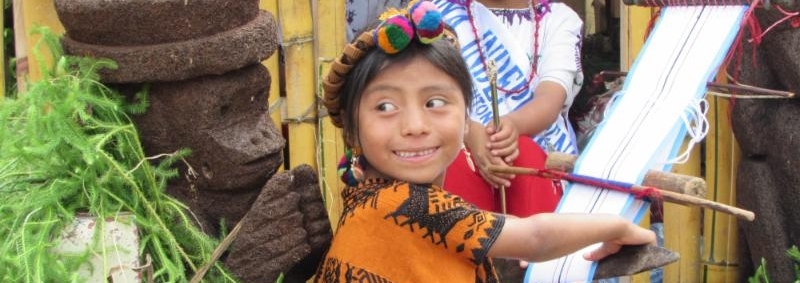
The people, specifically the women and girls of Chajul, embody Ixil culture in their daily lives — through language, dress, the preparation of food, and the woven designs they create. The rich Ixil culture is always visible in Chajul, but today it was particularly striking. Waves of yellows, purples, and greens flashed by as children laughed and twirled past, the girls of each class in matching colored huipiles (woven blouses).
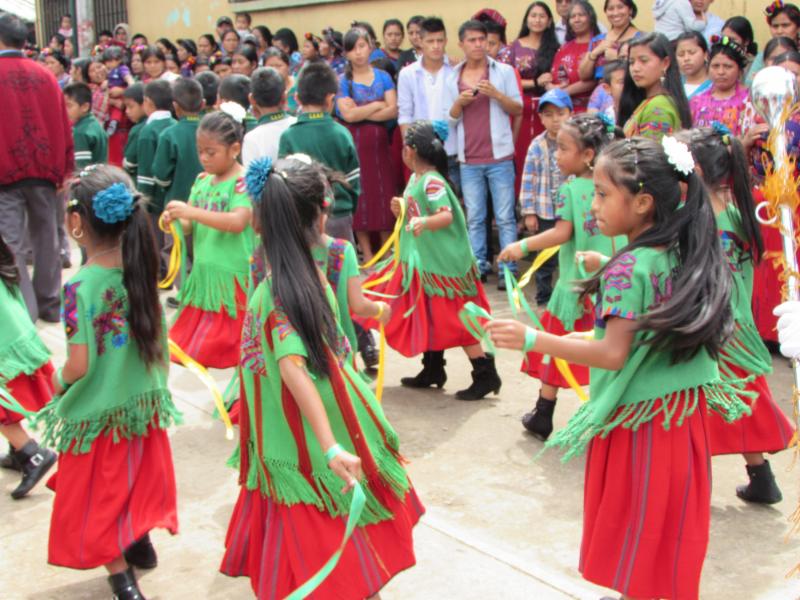 Symbols of traditional Ixil culture were intertwined with modern brass bands and beauty queens. The fearsome kot, the two-headed winged monster and an important figure in Ixil mythology, was hoisted above one of the many floats and embroidered in the huipiles of the women.
Our scholars’ faces were scattered throughout in the parade — waving sheepishly, leading packs of giddy children, beaming under bejeweled crowns, or proudly banging their drums (not always in rhythm).
Like the parade itself, our scholars exist between the past and the future, the communal and the individual. Rooted in tradition, wrapped in their culture, these students are nonetheless entering a modern world, armed with Spanish fluency and education.
They are loyal to their family and community, but they are also ambitious individuals, who strive to develop the skills to change their futures.
Like the offbeat musicians, our scholars march to the beat of their own drums.